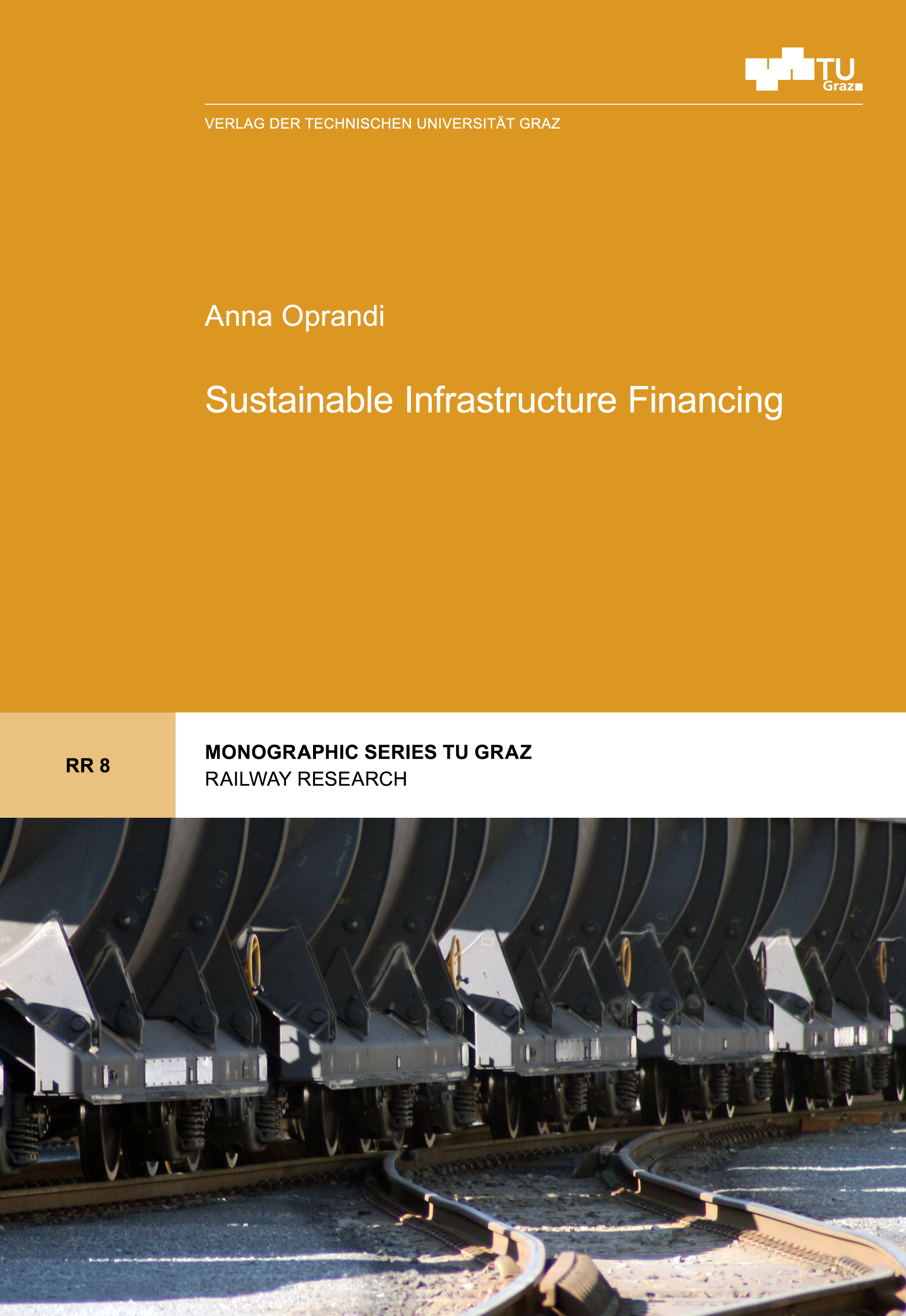
This work examines the economic importance of reliably funding railway infrastructure, focusing on maintenance and renewal. It introduces a methodology for calculating life-cycle costs across an entire rail network, allowing both individual track sections and overall budget impacts to be evaluated.
The study specifically analyses the effects of budget cuts, distinguishing between maintenance and renewal. It shows that while reducing renewal work can lower costs in the short term, it leads to significantly higher expenses in the long run that may take decades to recover. In contrast, cutting maintenance budgets offers no real savings – costs increase over time and ultimately exceed any short-term reductions.
A key finding is the unavoidable trade-off between minimising costs and maximising network availability.
The main conclusion is a strong recommendation: maintenance funding should not be reduced under any circumstances, as this results in higher long-term costs.
Issue: paperback
ISBN: 978-3-99161-105-9
Scope: 194 pages
Language: Englisch
Release date: July 2026
Series: Monographic Series TU Graz / Railway Research, Issue 8
€ 36.00
This work examines the economic importance of reliably funding railway infrastructure, focusing on maintenance and renewal. It introduces a methodology for calculating life-cycle costs across an entire rail network, allowing both individual track sections and overall budget impacts to be evaluated.
The study specifically analyses the effects of budget cuts, distinguishing between maintenance and renewal. It shows that while reducing renewal work can lower costs in the short term, it leads to significantly higher expenses in the long run that may take decades to recover. In contrast, cutting maintenance budgets offers no real savings – costs increase over time and ultimately exceed any short-term reductions.
A key finding is the unavoidable trade-off between minimising costs and maximising network availability.
The main conclusion is a strong recommendation: maintenance funding should not be reduced under any circumstances, as this results in higher long-term costs.
-
Sustainable Infrastructure Financing
OPEN ACCESS E-BOOK
Read more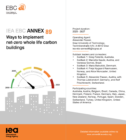
Alexander Passer, Marcella Ruschi Mendes Saade, Carlos Enrique Caballero Güereca, Greg Foliente, Vanessa Gomes Da Silva, Maria Balouktsi, Bernardette Soust Verdaguer, Freja Nygaard Rasmussen, Alice Moncaster, Rolf Frischknecht, Thomas Lützkendorf, Martin Jakob (Hrsg.)
IEA EBC Annex 89 Background information
- Catalog
- New releases
-
Open Access publications

- Enhanced e-books
- Series
- Akademische Reden an der Technischen Universität Graz
- Arbeitshilfen für die Praxis
- Archiv und Bibliothek
- Betonkolloquium
- Buddhist Architecture in the Western Himalayas
- BWL Schriftenreihe
- Electrical Power Systems
- Fachbücher Planung und Bau
- Facts & Figures
- Festschriften TU Graz
- Forschungsreihe IBBW
- Forum Technik und Gesellschaft
- Geodesy
- Holzbauentwurf+
- Immersive Learning Research Network Conference; Workshop, short papers, poster
- Institut für Gebäudelehre Jahrbuch
- International Brain-Computer Interface (BCI) Meeting
- LM.VM.2014
- Logistik Werkstatt Graz
- Materialien zu Schwerpunkten am Institut für Gebäudelehre
- Mathematical Modelling of Weld Phenomena
- Monographic Series TU Graz
- Monographic Series TU Graz|Advanced Materials Science
- Monographic Series TU Graz|Computation in Engineering and Science
- Monographic Series TU Graz|Production Science and Management
- Monographic Series TU Graz|Railway Research
- Monographic Series TU Graz|Reihe Fahrzeugtechnik
- Monographic Series TU Graz|Schriftenreihe des Instituts Betonbau
- Monographic Series TU Graz|Structural Analysis
- Monographic Series TU Graz|Techno- und sozioökonomisch orientierte Betriebswirtschaft
- Monographic Series TU Graz|Technoökonomie und industrielles Management
- Monographic Series TU Graz|Timber Engineering & Technology
- November Talks
- Proceedings of the International Brain-Computer Interface
- Railway Proceedings
- Schriftenreihe des Instituts für Baubetrieb und Bauwirtschaft
- Schriftenreihe des Instituts für Straßen- und Verkehrswesen
- Schriftenreihe des Instituts für Wohnbau der TU Graz
- Schriftenreihe zur Wasserwirtschaft
- Science, Technology and Society online
- Seminarreihe Bauunternehmensführung
- Studien zur Architektur | TU Graz
- Textbook Series
- Transform Industry: Guiding the transformation of SMEs
- TU Graz Jahresbericht | Annual report
- TU Graz people
- TU Graz Research
- VKM-THD Mitteilungen; IVT-Mitteilungen ab Bd. 100
- Future releases
- Authors
- Sale