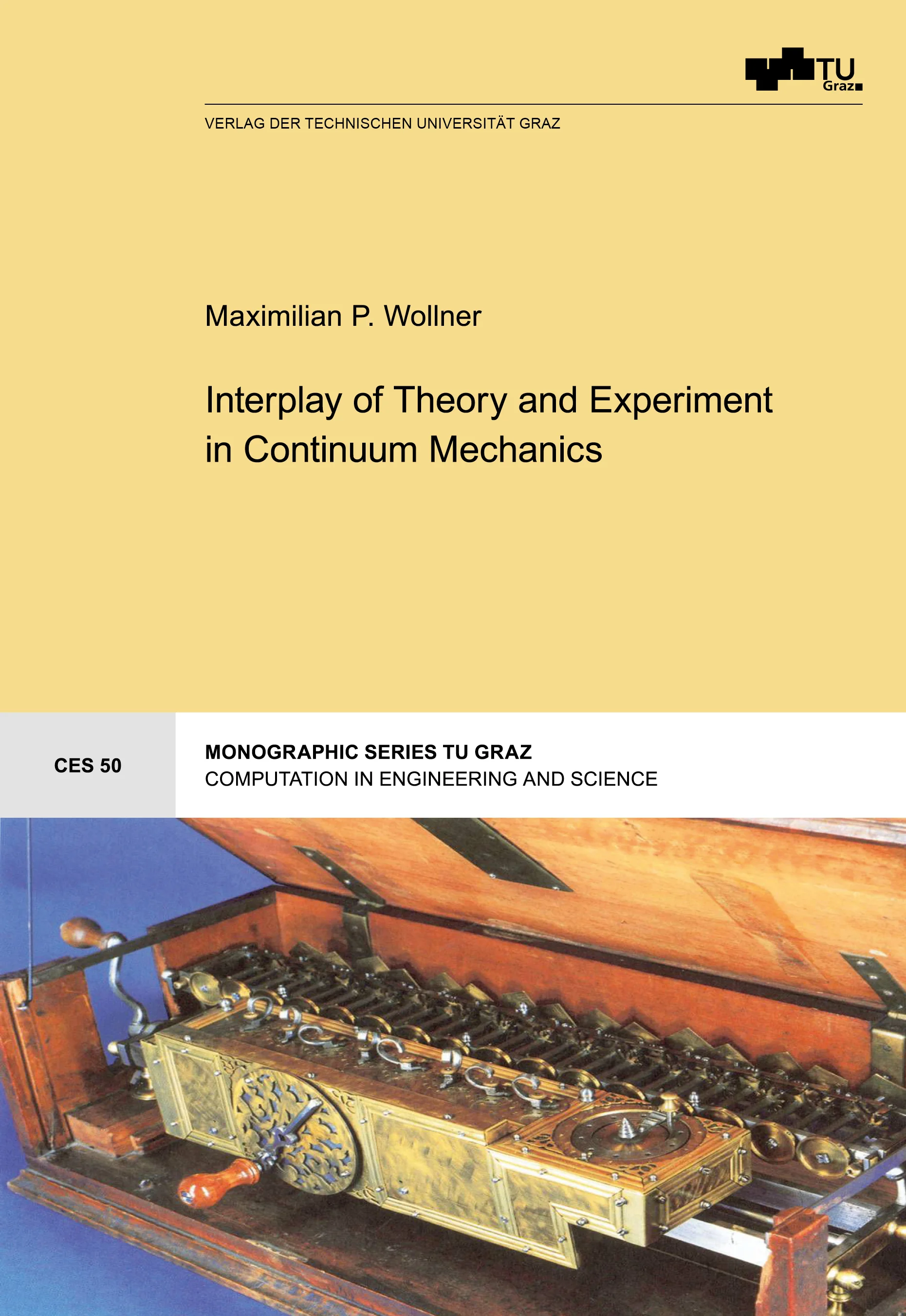
This cumulative dissertation deals in a broader sense with the question under what conditions continuum-mechanical material models have predictive power. The thesis consists of an essay and four scientific publications which examine this topic from a variety of perspectives. At its core, two overarching themes emerge: (i) the task of constraining constitutive laws so as to provide a physically reasonable material response for all admissible deformation paths, and (ii) the interplay of constitutive theory and mechanical testing as it relates to the interpretation and use of experimental measurements. Concerning the former, we discuss – among other things – constitutive inequalities for hyperelasticity and the thermodynamic consistency of a damage model for the Mullins effect. The results and ensuing discussions reveal why it is important to devise constitutive laws in the context of a general three-dimensional deformation in time and space, not just a preconceived selection of standard loading scenarios. We also find that the physical implications of common constitutive constraints are not as obvious as one might expect. In relation to the interaction of theory and experiment, we give a critique of the use of neural networks and mechanically preconditioned data for the purposes of material modeling. These topics illustrate that the acquisition and interpretation of experimental measurements are highly dependent on underlying theoretical considerations. Therewith related is the task of calibration once a functional form for a material model has been selected. In this context, we establish a Bayesian framework which demonstrates the ambiguity of selecting any particular set of parameters in light of necessarily finite experimental data. In summary, the thesis highlights conceptual and practical challenges for material modeling with consequences for the predictive power of constitutive laws in continuum mechanics.
Issue: Open Access E-Book
ISBN: 978-3-99161-123-3
Language: Englisch
Release date: October 2026
Series: Monographic Series TU Graz / Computation in Engineering and Science, Issue 50
This cumulative dissertation deals in a broader sense with the question under what conditions continuum-mechanical material models have predictive power. The thesis consists of an essay and four scientific publications which examine this topic from a variety of perspectives. At its core, two overarching themes emerge: (i) the task of constraining constitutive laws so as to provide a physically reasonable material response for all admissible deformation paths, and (ii) the interplay of constitutive theory and mechanical testing as it relates to the interpretation and use of experimental measurements. Concerning the former, we discuss – among other things – constitutive inequalities for hyperelasticity and the thermodynamic consistency of a damage model for the Mullins effect. The results and ensuing discussions reveal why it is important to devise constitutive laws in the context of a general three-dimensional deformation in time and space, not just a preconceived selection of standard loading scenarios. We also find that the physical implications of common constitutive constraints are not as obvious as one might expect. In relation to the interaction of theory and experiment, we give a critique of the use of neural networks and mechanically preconditioned data for the purposes of material modeling. These topics illustrate that the acquisition and interpretation of experimental measurements are highly dependent on underlying theoretical considerations. Therewith related is the task of calibration once a functional form for a material model has been selected. In this context, we establish a Bayesian framework which demonstrates the ambiguity of selecting any particular set of parameters in light of necessarily finite experimental data. In summary, the thesis highlights conceptual and practical challenges for material modeling with consequences for the predictive power of constitutive laws in continuum mechanics.
- Catalog
- New releases
-
Open Access publications

- Enhanced e-books
- Series
- Akademische Reden an der Technischen Universität Graz
- Arbeitshilfen für die Praxis
- Archiv und Bibliothek
- Betonkolloquium
- Buddhist Architecture in the Western Himalayas
- BWL Schriftenreihe
- Electrical Power Systems
- Fachbücher Planung und Bau
- Facts & Figures
- Festschriften TU Graz
- Forschungsreihe IBBW
- Forum Technik und Gesellschaft
- Holzbauentwurf+
- Immersive Learning Research Network Conference; Workshop, short papers, poster
- Institut für Gebäudelehre Jahrbuch
- International Brain-Computer Interface (BCI) Meeting
- LM.VM.2014
- Logistik Werkstatt Graz
- Materialien zu Schwerpunkten am Institut für Gebäudelehre
- Mathematical Modelling of Weld Phenomena
- Monographic Series TU Graz
- Monographic Series TU Graz|Advanced Materials Science
- Monographic Series TU Graz|Computation in Engineering and Science
- Monographic Series TU Graz|Geodesy
- Monographic Series TU Graz|Machine Components and Methods of Development
- Monographic Series TU Graz|Production Science and Management
- Monographic Series TU Graz|Railway Research
- Monographic Series TU Graz|Reihe Fahrzeugtechnik
- Monographic Series TU Graz|Schriftenreihe des Instituts Betonbau
- Monographic Series TU Graz|Structural Analysis
- Monographic Series TU Graz|Techno- und sozioökonomisch orientierte Betriebswirtschaft
- Monographic Series TU Graz|Technoökonomie und industrielles Management
- Monographic Series TU Graz|Timber Engineering & Technology
- November Talks
- Proceedings of the International Brain-Computer Interface
- Railway Proceedings
- Schriftenreihe des Instituts für Baubetrieb und Bauwirtschaft
- Schriftenreihe des Instituts für Straßen- und Verkehrswesen
- Schriftenreihe des Instituts für Wohnbau der TU Graz
- Schriftenreihe zur Wasserwirtschaft
- Science, Technology and Society online
- Seminarreihe Bauunternehmensführung
- Studien zur Architektur | TU Graz
- Textbook Series
- Transform Industry: Guiding the transformation of SMEs
- TU Graz Jahresbericht | Annual report
- TU Graz people
- TU Graz Research
- VKM-THD Mitteilungen; IVT-Mitteilungen ab Bd. 100
- Future releases
- Authors
- Sale